Routine for Relaxed Hair
What relaxer does to hair
Chemical relaxers (sodium hydroxide, calcium hydroxide, guanidine-based formulas) work by breaking disulfide bonds and restructuring the cortex to reduce or eliminate curl pattern. The chemistry is necessarily aggressive — it permanently modifies the protein structure of the hair fiber.
Effects on the hair:
- Disulfide bonds are deliberately broken — and not all reform.
- Polypeptide chains weaken in the structural reorganization.
- Cuticle is significantly disrupted. Relaxed hair has higher porosity than virgin hair indefinitely.
- Sebum migration changes. Even slightly altered curl patterns change how scalp oil distributes down the shaft.
Relaxed hair needs a different protocol than bleached hair — the chemistry is different, the damage profile is different, and the recovery window is longer.
The routine
Day of service
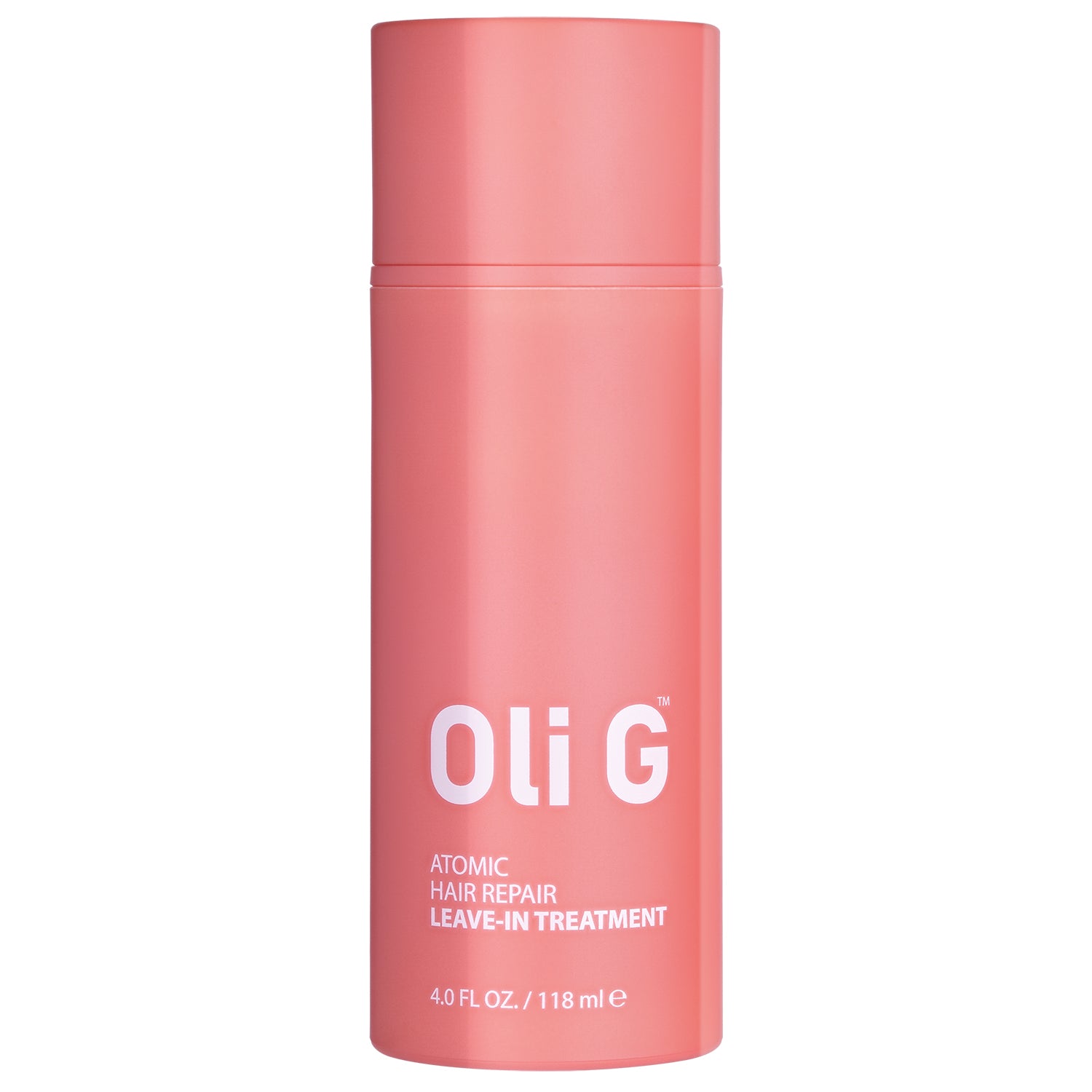
Atomic Hair Repair Leave-In on damp hair. Two to four pumps depending on length and density. Same day as relaxer service.
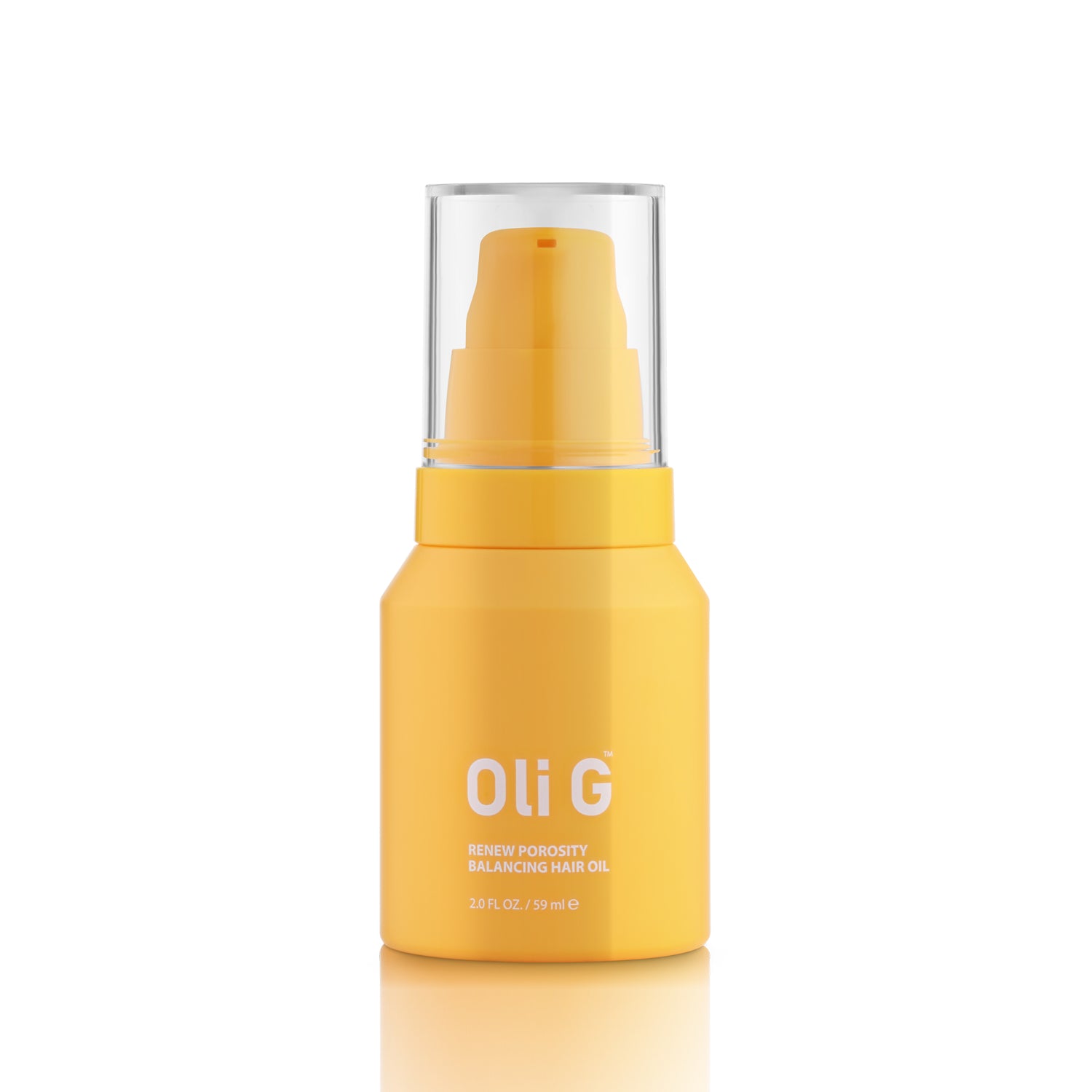
Renew Porosity Balancing Oil on the entire length. Three to five drops. Relaxed hair benefits from oil distribution beyond just the ends — the lipid layer needs replacement throughout.
No heat styling for the first 48–72 hours. Air dry or wrap.
Week 1 (the active recovery week)
The cuticle is still settling from the service. Wash every 5–7 days; relaxed hair generally doesn't need daily washing.
On wash day:
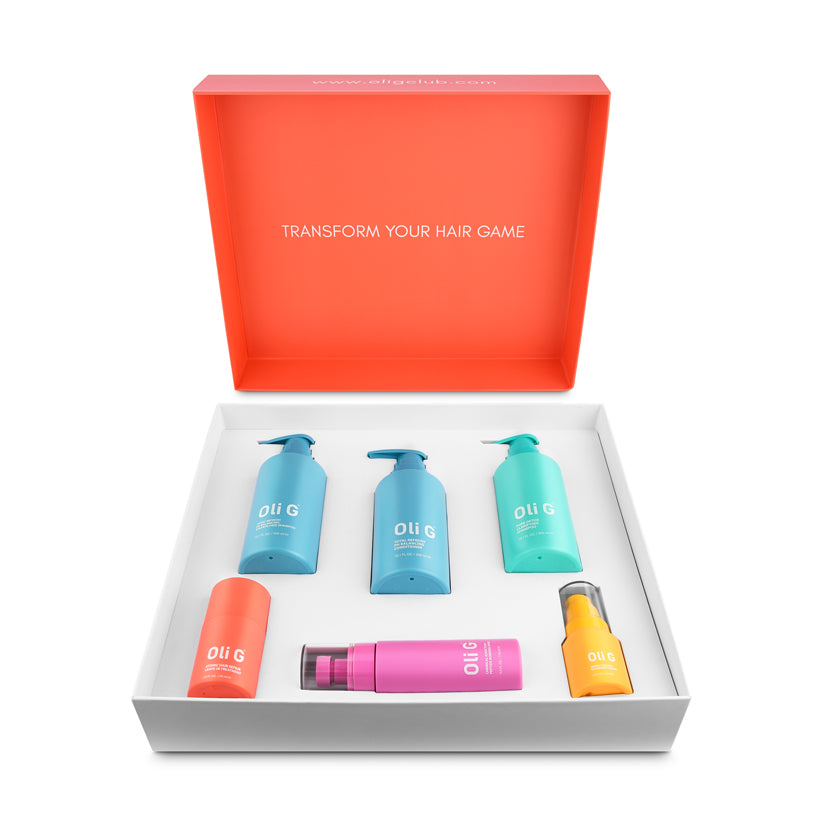
- Pure Detox Clarifying Shampoo + AquaLush Peptide Fiber Mask. Yes, Pure Detox right after a relaxer — the cuticle is open, and clarifying lifts any service residue. Follow with AquaLush as a deep conditioning treatment, 10 minutes, then rinse.
- Atomic Hair Repair Leave-In on damp hair.
- Renew oil on the entire length, focused on mid-lengths and ends.
Between washes:
- Nightly: Apply Renew on ends. Wrap with silk or satin scarf.
- Mid-week: Spritz hair with water if dry, then apply small amount of Atomic.
Weeks 2–3
Continue the routine above with one adjustment: switch from Pure Detox to Total Refresh Shampoo + AquaLush every wash. Save Pure Detox for week 4+.
The peptide deposit is now starting to compound. By the end of week 3, hair should feel meaningfully different from the immediate post-service state.
Week 4 and beyond
Transition to the standard Oli G routine for relaxed hair:
- Total Refresh Shampoo + Conditioner on most wash days.
- AquaLush once a week (typically the wash where hair feels driest).
- Pure Detox once every 2–3 weeks (relaxed hair holds buildup less than chemically untreated hair).
- Atomic on damp hair every wash.
- Renew every wash on mid-lengths and ends, plus nightly on ends.
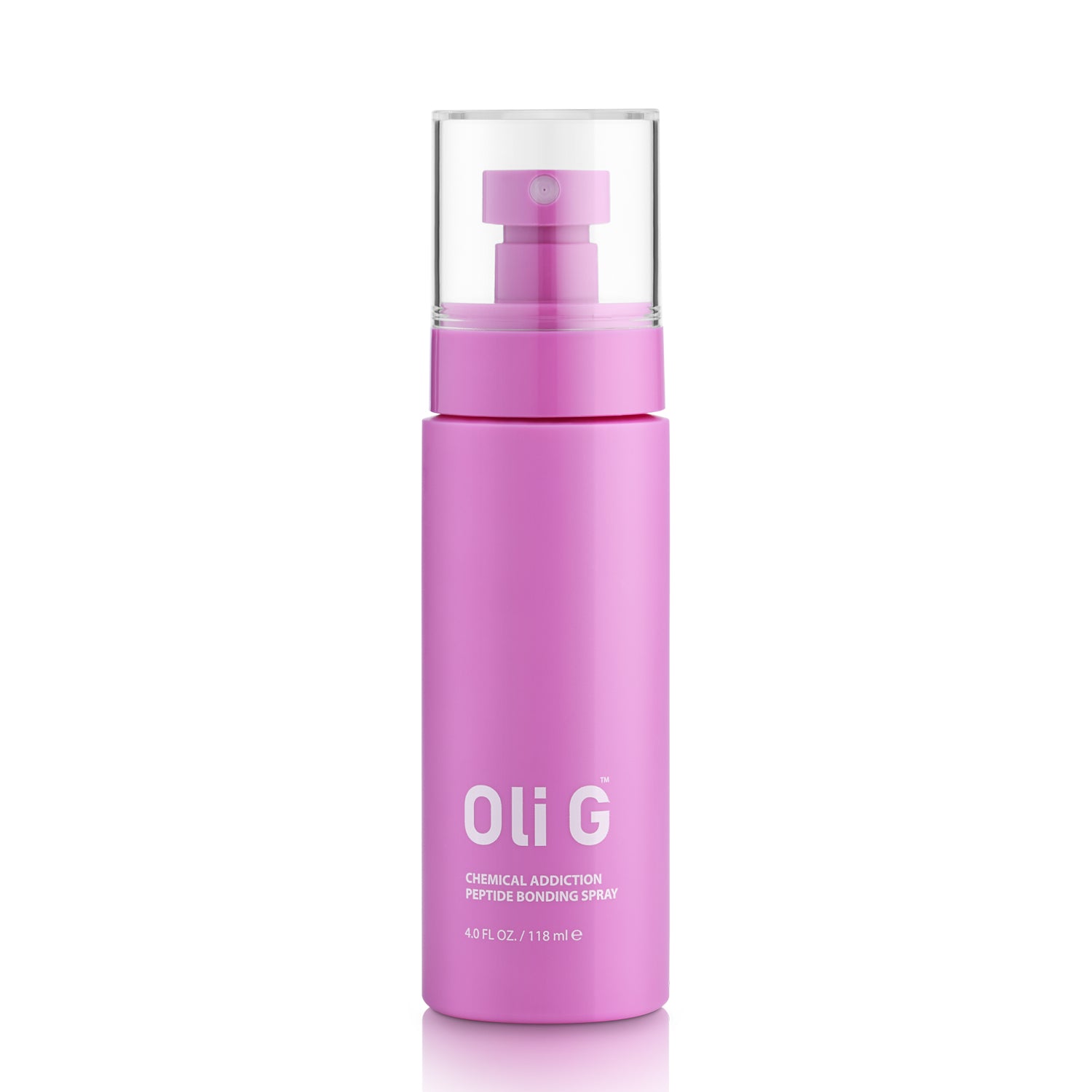
- Chemical Addiction before any heat styling.
What to expect
- Week 1: Hair feels less stripped. Pliability returns.
- Week 2: Less shedding at the cuticle. Detangling smoother.
- Week 3: Strength noticeably improved. Cuticle laying flatter.
- Week 4+: Hair behaves more resilient. Holds styles longer. Less breakage.
When to retouch
Relaxer touch-ups should be planned 8–10 weeks apart minimum, sometimes longer. The longer the gap, the more the peptide deposit has compounded and the better the hair holds up to the next service.
Don't retouch before week 6 unless you have a specific event and your stylist directs.
What to avoid
- Layering chemical services. No bleach, color, or relaxer touch-up within 4 weeks of the initial service.
- High-heat styling without protection. Always Chemical Addiction before heat. Drop heat tool temperature 20–30 degrees in the first 4 weeks post-service.
- Tight protective styles too soon. Wait 2 weeks post-relaxer before any tension-based style (braids, sew-ins).
- Skipping the oil. Relaxed hair needs daily lipid replacement on ends.
- Hot-water washing. Lukewarm only.
If you also have color or bleach
Stacked chemical history requires extra care:
- AquaLush twice a week for the first 4 weeks post-service (not once).
- Skip Pure Detox for the first 3 weeks (vs. the once-week schedule above).
- Extend the recovery window by 2 weeks before transitioning to standard maintenance.
Special note: protective styles
If you wear braids, twists, locs, or sew-ins between services, see the Routine for Protective Styles. The on-install and take-down protocols are different from the unstyled relaxed routine.